AI Based Brokerage vs. a Local Real Estate Agent: Why 2% Savings Can Cost You
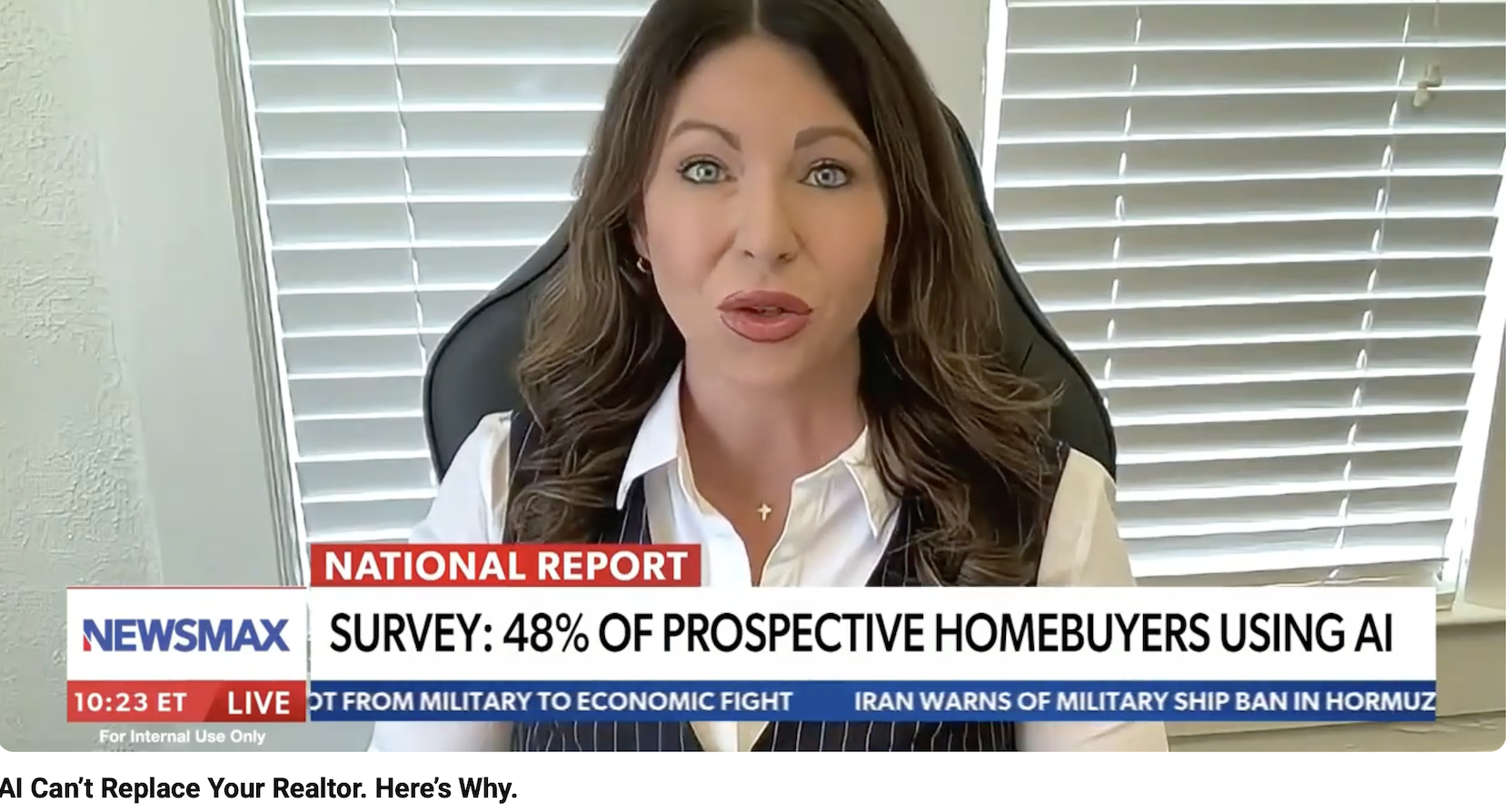
I went on Newsmax across from the CEO of an AI based brokerage that promises to save buyers 2%. Here is what that pitch leaves out, and why a real local agent still saves you more.
I Debated an AI Brokerage CEO on Newsmax. Here Is What Got Left Out.
Every few years a shiny new company shows up promising to make real estate cheaper by cutting the agent down to a piece of software. The latest version came sitting right across from me on Newsmax. The CEO runs an AI powered brokerage built on a simple pitch: hire brand new agents, pay them a small salary, let the technology do the heavy lifting, and hand the buyer a 2% savings for the trouble.
It sounds great in a thirty second segment. It sounds a lot less great once you have actually sat at a closing table in Tampa Bay and watched what really decides whether a buyer wins the house, overpays for it, or walks away protected. So let me say on my own blog what I only had a few minutes to say on live television.
AI Cannot Sit in the Room Where the Deal Is Actually Won
Here is the part the algorithm never mentions. The hardest, most valuable moments in a transaction are the emotional ones, and software has no idea they are even happening.
A negotiation is not a spreadsheet. It is reading the pause on the other end of the phone when the listing agent says a number. It is knowing that the seller just went through a divorce and wants a fast, clean close more than they want the last few thousand dollars. It is sensing that a nervous buyer is about to talk themselves out of the right house and knowing exactly when to slow everything down. AI can draft an offer. It cannot feel the room. And in this market, feeling the room is often what separates the winning offer from the one that gets politely declined.
That is the whole job when I handle buyer representation, and it is not something you can outsource to a chatbot that has never met the human beings on the other side.
I Frequently Save Buyers Well Over 2 Percent
The 2% number is the entire marketing hook, so let me be blunt about it. I have regularly saved my clients far more than 2%, and not by accident.
I save it in the negotiation, by knowing what a home is truly worth before we ever write, so we never chase an inflated price. A proper market analysis on the front end means my buyers make strong offers on the right homes instead of overpaying on emotion. I save it after the inspection, when there is real money on the table in repairs, credits, and terms, and knowing how hard to push (and when to walk) is worth many times a flat 2%.
And I save it by keeping people out of expensive mistakes entirely. In our area that can mean flagging a property where the insurance picture, the flood exposure, or the seawall condition could cost a buyer dearly down the road. Those things vary by the individual property and should always be verified for each specific address with the appropriate official sources and licensed professionals. A salaried agent who started last month, backed by a national model that has never set foot in Pinellas County, may not even know to raise the question.
Brand New Agents on a Small Salary Are Not Free. You Just Pay Differently.
Let me translate the business model honestly. Hire brand new agents. Pay them a small fixed salary. Point them at volume.
There is nothing wrong with new agents. We were all new once. But experience is the entire point of hiring one, and a salaried rep processing as many buyers as possible is not incentivized around your specific outcome. They are incentivized to keep the pipeline moving. When the negotiation gets hard, when the appraisal comes in low, when the deal is quietly falling apart at 8pm two days before closing, you want someone who has personally lived through that a hundred times, not someone reading a script for the first time while an app tells them what to type.
This is exactly why I still insist on a real, sit down real estate consultation before I ever open a door. I want to understand your goals, your fears, and your finances, because that is what lets me actually fight for you later.
The Handyman on Speed Dial Is Worth More Than the App
Here is the example I gave on air, because it is so ordinary and so telling. A final walk through goes sideways. The seller left the place a mess, a toilet is running, the fridge that was supposed to convey is gone, or something broke between contract and closing. The buyer is standing there panicking, moving truck scheduled, keys supposed to change hands in a few hours.
An AI cannot fix that. But I can pick up my phone and have a trusted handyman at that house within the hour, because I have spent years building those relationships. That contact list is not a feature you can download. It is a plumber who answers on a Sunday, an insurance agent who can bind a policy fast in a tricky Florida market, a lender who will not let a rate lock lapse, a title officer who catches a problem before it blows up the closing, and yes, a handyman who shows up on an hour of notice. When something goes wrong, and in real estate something almost always goes wrong, those relationships are the difference between a stressful afternoon and a dead deal.
Local Knowledge Does Not Come Out of a National Database
Tampa Bay, St. Petersburg, and the beach communities are not a generic market you can model from a server somewhere else. The value here can change block by block. Flood zones, evacuation levels, insurance costs, canal depth for boaters, seawall age, and what an HOA will and will not allow can swing the real cost of owning a home in ways a national algorithm simply does not capture. Every one of those items depends on the individual property and should be verified for the specific address with the county, the appropriate official source, or a licensed professional.
When I am helping someone buy near the water, being a waterfront listing specialist means I know which questions to ask before my buyer falls in love with a view that comes with problems they never saw coming. That is judgment built from years on the ground, not a data point scraped off a listing.
Cheaper Is Not the Same as Better, Especially on Your Largest Purchase
I understand the appeal of saving money. I am the first person to tell a client where to spend less. But your home is very likely the biggest financial decision of your life, and shaving a modest percentage on representation means very little if it costs you the house you wanted, an extra chunk on the purchase price, or a problem nobody caught in time.
The AI companies are selling a discount of, on average, 2%. I am selling an outcome. Those are not the same thing, and the gap between them tends to be a lot wider than 2%.
Where This Is All Actually Headed
I am not anti technology. I use excellent AI tools every single day, and they make me faster and sharper for my clients. The honest version of the future is not agent versus algorithm. It is a great agent using great technology, with a real human being accountable for your result.
What worries me about the pure discount pitch is that it quietly removes the person who is supposed to answer for you when it counts. Software does not have a fiduciary duty. It does not lose sleep over your closing. It will not drive across town on a Sunday. I will.
FAQ: AI Brokerages, Discount Agents, and Buyer Representation
An AI or discount brokerage may advertise a flat savings, often around 2%, by lowering its own costs and paying newer agents a salary. Whether you actually come out ahead depends on the individual transaction. A skilled negotiator can often save far more than a flat percentage through pricing strategy, inspection negotiation, and avoiding costly mistakes, while a purely software driven process may miss local risks that vary by property and should be verified for each specific address. Cheaper representation and better outcomes are not automatically the same thing.
A local agent can read the emotional and human side of a negotiation, sense a seller’s true motivation, manage a nervous buyer, and physically show up when a deal is in trouble. Just as important is the relationship network, including handymen, plumbers, inspectors, lenders, insurance agents, and title officers who can act on short notice. That kind of on the ground problem solving and local market judgment is very difficult for software to replicate.
Not necessarily, but it is worth understanding the model. New agents can be excellent, yet experience is often exactly what you are paying for. A salaried agent handling high volume may be incentivized around throughput rather than your specific outcome. Buyers should ask who will actually handle their negotiation, how much experience that person has in the local market, and who is accountable when something goes wrong.
Many buyers in this area still benefit from full service representation because local conditions can change block by block. Flood zones, insurance costs, seawall condition, and HOA rules can all affect the real cost of ownership and depend on the individual property, so each should be verified for the specific address with the appropriate official source. A local agent who knows these markets can help you weigh those factors before you commit.

Want a Real Person in Your Corner, Not Just an App?
If you are buying in Tampa Bay, St. Petersburg, Clearwater, or anywhere along the Gulf, I would love to show you what full service representation actually looks like. Reach out and let’s talk through your goals, your budget, and exactly how I plan to save you more than a flat percentage ever could.
Talk to Liane



Leave a Reply