Short answer: You’re not pricing for this market, you’re underestimating what makes your property unique, and you’re negotiating like you have 47 backup offers when you don’t. Let’s fix that.
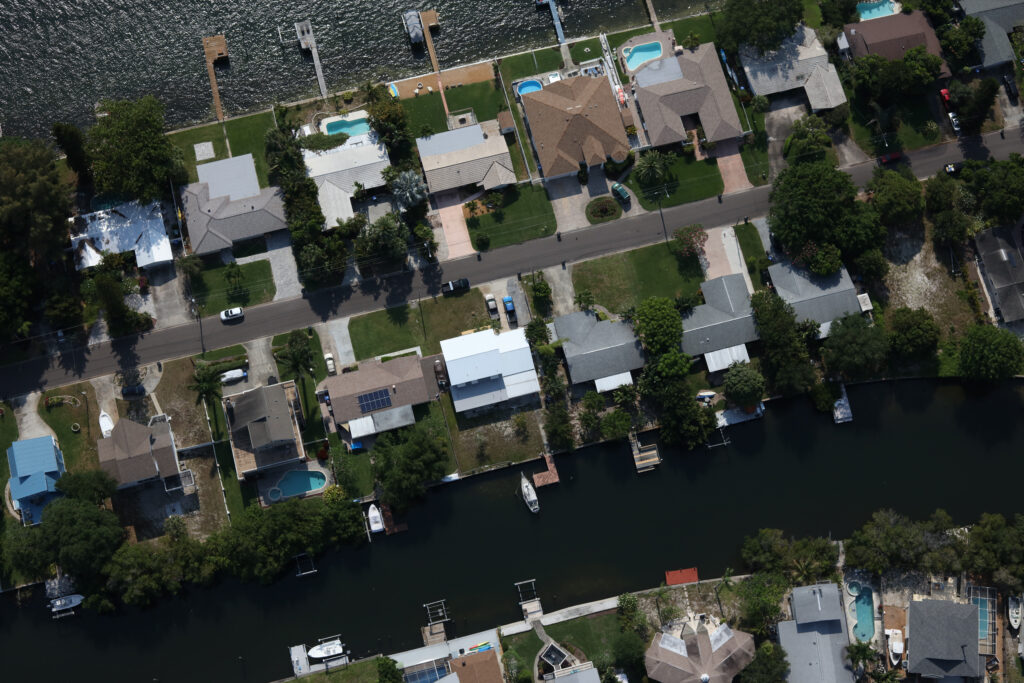
Here’s the Thing About Selling Luxury in St. Pete Right Now
When you own a waterfront home with a private dock or a 1920s historic estate with original hardwoods and character that new construction can’t fake, you’re playing a different game than the typical seller. Your buyer isn’t comparing your home to the neighborhood—they’re comparing it to their lifestyle, their Instagram feed, and their idea of what “makes sense for a waterfront property owner in 2026”. This is especially true for luxury waterfront and historic sellers.
The problem? Most luxury sellers make the same 9 mistakes when they list. And these aren’t small oopsies—they cost money, time, and often mean the difference between selling to someone and selling to the right someone.
Let’s break them down.
Mistake #1: Pricing Historic Charm Like It’s a Liability Instead of an Asset
The mistake: You have original 1920s crown molding, a grand staircase that Instagram would weep over, and a lot that only appears twice a decade. So you price it like a mid-century ranch that needs “updating.”
Why this backfires: Historic home buyers aren’t looking for new—they’re looking for irreplaceable. When you underprice character, you attract the wrong people: budget-conscious flippers who want to gut it, not enthusiasts who want to preserve it.
How to fix it:
- Get comparables on other historic homes, not homes that have been renovated to death
- Price the irreplaceability: That 1920s-era millwork? You can’t source that at Home Depot
- Highlight what serious historic buyers actually care about: original bones, scale of rooms, architectural integrity
- If you’ve done thoughtful renovations (new plumbing, roof, HVAC), price them in—they added value, not subtracted it
The reality: Historic homes that sell for top dollar aren’t the most updated. They’re the most honest about what they are.
Mistake #2: Thinking “Waterfront” Is Enough—It Isn’t (Anymore)
The mistake: You have a dock. Water views. You assume that’s the whole story. Price reflects it. Marketing is basically just “waterfront home” and calling it a day.
Why this backfires: In 2026, waterfront buyers are splintering. Someone buying a Boca Ciega Bay home with a 50-slip dock has entirely different priorities than someone buying a narrow-canal home in Shore Acres. One wants to run a T top boat. One wants to kayak and look pretty. And honestly? They’re pricing differently.
How to fix it:
- Know your specific waterfront: Bay access vs. canal home vs. river vs. bayfront? Each has a different buyer profile and price point
- Understand the boating situation: How many feet of dock? Boat lift included? Depth at high/low tide? Don’t assume buyers know
- Price for your waterfront type, not waterfront in general
- Market the lifestyle, not the water: “Morning coffee on your dock,” not “Waterfront property”
The reality: A canal home in Shore Acres with a small dock and a paddleboard lifestyle is NOT the same as a Boca Ciega Bay home with serious mooring. They shouldn’t be priced the same, and they shouldn’t be marketed to the same buyer.
Mistake #3: Setting Your Price Based on What You Paid (or What You Want)
The mistake: You bought it for $1.2M in 2015. You’ve updated the kitchen. Market feels good. You list at $1.5M because that’s what it should be worth, right?
Why this backfires: The market doesn’t care what you paid. It doesn’t care what you want. It cares what this buyer is willing to pay right now. And luxury waterfront and historic homes sit longer than you’d think when they’re priced on emotion instead of data.
How to fix it:
- Pull comparables on homes that actually sold in the last 90 days, not homes that are listed
- Factor in condition: That kitchen update is worth X. That roof that’s 8 years old is worth the cost of replacing it in ~7 years
- For waterfront: recent dock work, seawall condition, flooding history—these are deal-breakers that affect price
- For historic: updated systems (electrical, plumbing, HVAC) add value; deferred maintenance subtracts it
- Work with a realtor who actually knows luxury pricing in your specific area, not someone who uses a formula
The reality: Overpriced is the fastest way to look like you don’t know the market. And once a home is marked overpriced, it’s hard to recover.
Mistake #4: Neglecting the Unglamorous Details That Actually Kill Deals
The mistake: Your waterfront home has a seawall that’ll need $40K in repairs in 3 years. Your historic home has 1970s electrical that’s held together with hope. You don’t mention it. Or you mention it casually like it’s fine.
Why this backfires: Luxury buyers do their homework. They hire inspectors. They know what they’re looking at. When you hide or downplay issues, you look like you don’t know your own property—or worse, like you’re hiding something intentionally. Either way, you just tanked the deal.
How to fix it:
- Know your property’s vulnerabilities before you list
- For waterfront homes: Seawall condition, dock age/maintenance, flood history, insurance costs (seriously, get actual quotes)
- For historic homes: Foundation, original electrical/plumbing, roof age, window condition, HVAC systems
- Disclose proactively and honestly. Yes, it means lower price sometimes. But it also means fewer surprises, faster closing, and no last-minute walkaway
- Consider a pre-listing inspection—it kills negotiation surprises and builds buyer confidence
The reality: Luxury buyers aren’t scared of needing work. They’re scared of not knowing they need work.
Mistake #5: Marketing to Everyone Instead of Your Actual Buyer
The mistake: Your listing photos look like they could be in Miami, or Tampa, or anywhere. The copy says “luxury waterfront” with no personality. You’re hoping someone, somewhere, will see it.
Why this backfires: Luxury sellers have options. They’re not in a rush. If your listing doesn’t immediately say “THIS is the waterfront home for a boating lifestyle” or “THIS is the historic estate for someone who loves 1920s architecture,” it disappears into the sea of listings.
How to fix it:
- For waterfront: Market to the boater, the paddler, the entertainer—not just “waterfront buyer”
- For historic: Market to the preservationist, the family with heritage roots, the Instagram-lover of original details
- Show the lifestyle, not just the property: Sunset from the dock. Morning coffee in the original sunroom. Holiday parties in that grand dining room.
- Use specific language: “Shore Acres waterfront with private dock” beats “waterfront home”
- Tell the story: Why this property? What makes it different?
The reality: The right buyer will pay top dollar for the right home—if they can find it. Your job is to help them find it.
Mistake #6: Negotiating Like You’re in a Buyer’s Market (When You’re Actually in a Selective Market)
The mistake: Offer comes in. It’s $50K below ask. You counter at ask. You’re expecting a fight. Instead, the buyer walks.
Why this backfires: In 2026, luxury buyers aren’t desperate. If they lowball, it’s either because they see a real problem OR because they’re testing to see if you’re flexible. Either way, the old game of “I ask high, they bid low, we meet in the middle” doesn’t work when buyers have options.
How to fix it:
- Understand the difference between a genuinely interested buyer and a tire-kicker: Genuinely interested = asks about specifics (dock condition, seawall, systems). Tire-kicker = vague offer with lots of contingencies.
- Price right to begin with (see Mistake #3): This eliminates 80% of nonsense negotiations
- Know your walkaway point before offers come in: What price would you actually accept? What contingencies matter? What timeline?
- Counter strategically: If the offer is serious but low, counter closer to their number if the buyer feels right. If they’re being ridiculous, tell them so and move on.
- Understand what luxury buyers actually negotiate on: Not price always, but terms. Closing timeline. Contingencies. Included items (dock furniture, boat lift, etc.).
The reality: The best negotiation is one where both sides feel like they won. If you’re fighting tooth and nail over every $5K, you’ve either priced wrong or attracted the wrong buyer.
Mistake #7: Not Preparing for the “But Is Flood Insurance Going to Bankrupt Me?” Conversation
The mistake: You don’t bring it up. Buyer finds out in inspection. Suddenly, that $1.3M waterfront home means $8K/year in flood insurance. Deal dies on the vine.
Why this backfires: Flood insurance for waterfront homes is a real thing. Buyers will factor it in. If you haven’t, they will—and they’ll use it as a negotiation weapon.
How to fix it:
- Get actual flood insurance quotes before you list. Not estimates. Actual quotes.
- Know your flood zone: X (no insurance required), AE (required), VE (required and expensive)
- Tell buyers upfront in marketing: “Flood insurance ~$X/year” shows confidence and transparency
- For homes NOT in a flood zone: Highlight this as a major selling point (it is)
- Understand that some buyers will walk over flood insurance costs, and that’s okay—they weren’t your buyer anyway
The reality: A buyer who knows the real cost upfront is a buyer who shows up to closing. A buyer who finds out at inspection is a buyer who renegotiates or walks.
Mistake #8: Thinking Historic Means “You Can’t Update Anything” (Or That You Must Update Everything)
The mistake: Your 1920s home still has original plumbing from 1920. You price it like it’s a time capsule. Or you gut it and price it like new construction.
Why this backfires: Historic buyers exist on a spectrum. Some want original everything. Some want functionality with original character. Very few want 100-year-old plumbing.
How to fix it:
- Update systems (plumbing, electrical, HVAC, roof) before listing. Call these improvements, not renovations.
- Leave architectural details alone: Molding, hardwoods, windows, built-ins—these are the value
- Price based on honest condition: A home with updated systems but original character is actually a sweet spot for buyers
- Don’t over-renovate: A $500K gut job that makes it look new defeats the purpose of buying historic
- Let character show: Those quirky doorways, the original tile work, the built-in bookcases—these are why people buy historic homes
The reality: Historic homes sell best when they’re livable historic, not “museum piece” or “total fixer.”
Mistake #9: Not Having a Realtor Who Actually Understands Luxury/Waterfront/Historic Markets
The mistake: Your neighbor’s cousin does real estate. Or you have a family friend. Or you picked someone who’s great at volume but doesn’t specialize in luxury.
Why this backfires: Selling a $2M waterfront estate or a $1.5M historic home requires different skills than selling five houses a month at $500K each. You need someone who knows luxury buyer psychology, can navigate complex negotiations, understands the local nuances of waterfront vs. canal vs. bay, and knows which details matter to historic buyers.
How to fix it:
- Interview realtors who specialize in luxury (not just have a license)
- Ask them: What waterfront homes did you sell last year? What historic homes? What was the average days on market? Did you represent buyer or seller?
- Check references from sellers, not just buyers
- Make sure they know St. Pete and Tampa neighborhoods deeply—not just in general
- A good luxury realtor costs you less in the long run (they price right, they find the right buyers, they negotiate better)
The reality: This is the biggest transaction of your life, probably. Spend the time finding the right partner.
So Here’s What Happens When You Get It Right
You price your waterfront or historic home correctly for this market, you understand your actual buyer, you’re transparent about what needs work, you market to the right person, you negotiate strategically, and you have a realtor who gets it.
That’s when a luxury home sells to someone who loves it—not just someone who wanted to buy something. And that’s when you get the real money.
Ready to talk about your specific property? Whether it’s a waterfront estate in Shore Acres, a historic home in Snell Isle, or anything in between, let’s figure out the right approach for your home.
Call/Text: 727-755-3325 or email me directly
Because selling luxury isn’t about having the fanciest listing. It’s about finding the right buyer, and everything else follows from there.




Incredible insight. Everything in this blog makes great sense and can save everyone involved time. Well done!