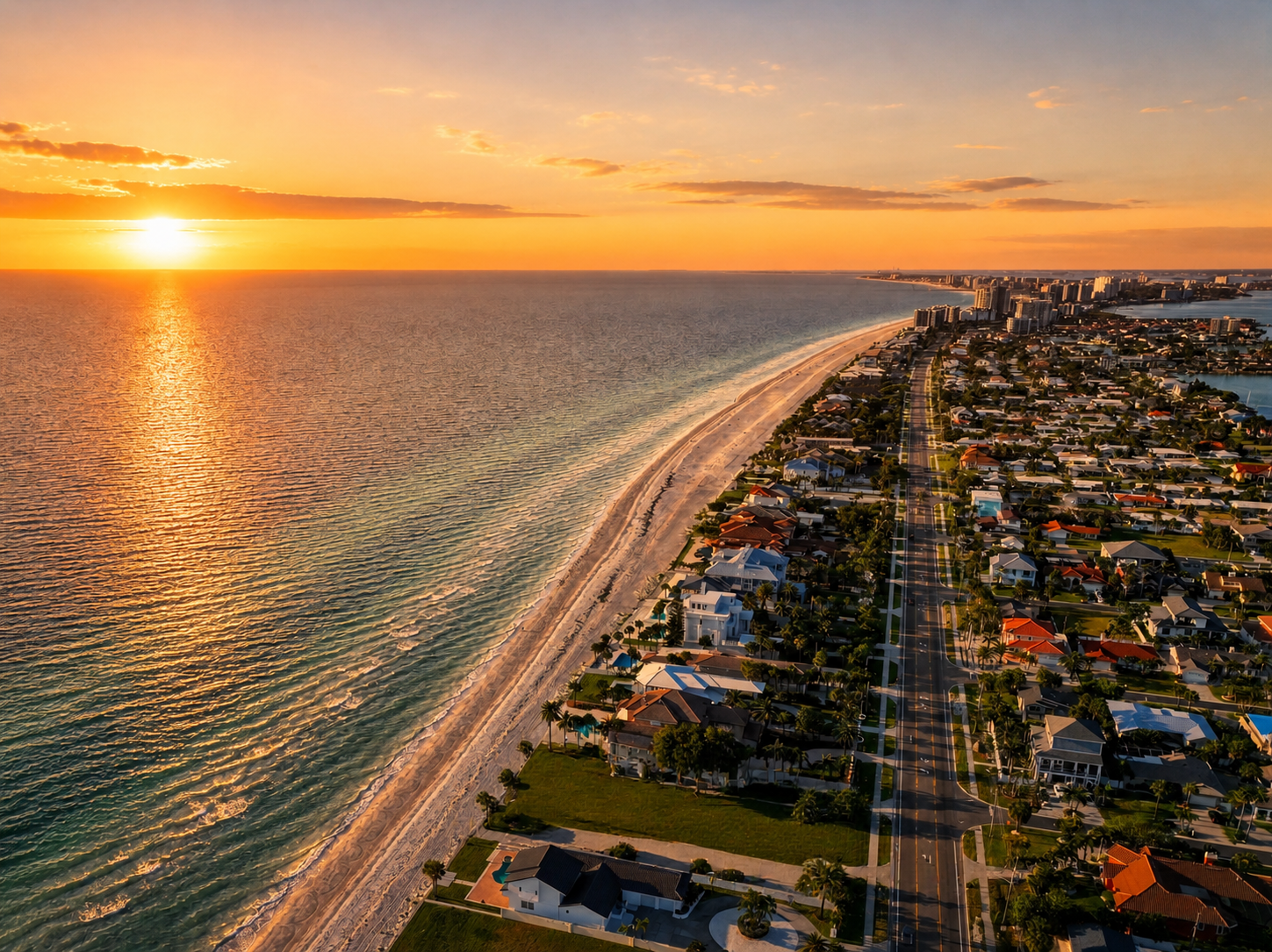
Why Millionaires Are Choosing Florida’s West Coast
High-income earners are leaving California and New York at a historic pace, and the smart money is landing on Florida's west coast before everyone else catches on.
Florida Didn't Change. California and New York Did.
Something shifted a few years ago, and it has only been picking up speed. Florida is the same state it has always been: no income tax, year-round warmth, waterfront lifestyle, and a relatively straightforward cost of living compared to the coasts. What changed is that California and New York made it progressively harder to justify staying. California now loses a taxpayer to another state roughly every two and a half minutes. New York continues to bleed high earners year after year. The result is a migration wave that the IRS data makes impossible to ignore.
According to IRS adjusted gross income migration figures, Florida posted the highest net AGI gain in the country at $20.6 billion in a single year. California lost $11.9 billion in net AGI during that same period. New York lost $9.9 billion. Florida gained a net 50,485 new residents earning more than $200,000, more than three times the high-income gains of any other state. Over 45% of Florida's total net population gain came from people earning $200,000 or more. This is not a retirement migration story. This is a wealth transfer of generational scale.
What is happening now is that the early wave is already here. I appeared on Newsmax this morning discussing exactly this: a mass migration of AI tech millionaires who are actively planning their move to Florida as their equity payouts hit. The phones are ringing with California and New York area codes from buyers who are researching before they have full liquidity. That matters, because the larger wave is still forming.
The Tax Math That Makes It a No-Brainer
The headline number that stops people in their tracks is the capital gains comparison. California taxes capital gains as ordinary income at a top rate of 13.3%, the highest in the country. Florida's state capital gains rate is zero. On a $10 million liquidity event, that is potentially $1.3 million that stays in your pocket. In much of Tampa Bay, $1.3 million can buy a home outright. The tax savings alone can fund the move and the house.
New York compounds the problem with what has become known as the millionaire's tax. New York City residents earning over $1 million can face a combined state and city income tax rate that reaches into the mid-teens as a percentage. The exact rate depends on total income and specific filing circumstances, so anyone considering a move should verify their situation with a qualified tax advisor. What is not in dispute is the directional story: the tax gap between New York and Florida is wide, and it is getting wider with each legislative session in Albany.
The income tax picture is equally clear. Florida has no state income tax. California's top rate sits at 13.3%. For a household earning $500,000 a year, the annual difference in state income tax alone can exceed $60,000. Over a decade, that is more than $600,000 that stays invested or goes toward the mortgage rather than to Sacramento.
Why St. Petersburg, Clearwater, and Sarasota Are Where the Smart Money Is Looking
Palm Beach and Miami get all the headlines. That is precisely why the newer wave of buyers is looking elsewhere. The west coast of Florida offers the same lifestyle fundamentals: Gulf sunsets, waterfront access, warm winters, and no income tax. The price per square foot is a fraction of what you would pay in Palm Beach County or Miami Beach for a comparable property. Buyers relocating from high-cost markets are discovering they can get more home, on or near the water, with money left over.
A City That Has Reinvented Itself
St. Petersburg has transformed over the past decade into one of the most livable mid-size cities in the country. The arts district, restaurant scene, waterfront parks, and proximity to both Tampa and the Gulf beaches make it a natural fit for buyers who want urban amenities without urban density. Home prices remain compelling relative to Southeast Florida markets, and the inventory of luxury and waterfront properties continues to attract buyers priced out of Palm Beach.
If you are relocating from a major metro and want walkability, culture, and direct Gulf access without the South Florida price tag, St. Pete deserves serious attention. A buyer's agent who knows the local submarkets can help you identify neighborhoods that match both your lifestyle and your budget before listings hit the broader market.
Waterfront Access at a West Coast Premium That Still Beats Miami
Clearwater consistently ranks among the top beach destinations in the country, and the real estate market reflects that without fully pricing out buyers who are coming from California or New York. Waterfront and Gulf-view properties offer genuine lifestyle value, and the Clearwater to Dunedin corridor has attracted a growing number of buyers seeking a quieter, more residential feel than downtown St. Pete while staying close to the water.
The boating and beach culture here is genuine, not manufactured. For buyers who are moving specifically to live near the Gulf, Clearwater offers a range of price points from executive waterfront estates to well-priced single-family homes a short drive from the beach. Verifying flood zone designation and current insurance quotes on any specific property is an important step before making an offer.
Culture, Architecture, and Coastal Living South of Tampa Bay
Sarasota has long attracted a sophisticated buyer who wants Gulf access alongside a strong arts and cultural scene. The city punches well above its weight in restaurants, galleries, and architectural character, and the real estate market includes everything from downtown condos to estate homes on barrier island lots. Prices have risen meaningfully over the past several years, but Sarasota still offers significant value compared to equivalent coastal properties in South Florida.
Buyers coming from Los Angeles or San Francisco often find Sarasota's combination of small-city feel, walkable downtown, and Gulf proximity familiar in the best way. It offers the coastal lifestyle they moved to California for, at a price point California no longer makes possible.
The Liquidity Wave That Has Not Fully Arrived Yet
One reason savvy buyers are calling now, before they have cash in hand, is that several major liquidity events are still unfolding. SpaceX created an estimated 4,400 employee millionaires on paper, but those shares are subject to a staggered lockup schedule. The first 20% of shares can be sold following Q2 earnings, which are expected to land between mid-July and September 2026. From there, rolling tranches of roughly 7% release at intervals, with the bulk of shares freeing up around December 2026. The real wave of spendable liquidity is set to arrive this fall through the end of the year.
OpenAI and Anthropic are each expected to pursue public offerings in late 2026 or early 2027. Those events will create their own class of newly liquid tech workers looking to convert paper wealth into real assets, and many of them will be doing exactly what SpaceX employees are doing now: researching markets before the check clears.
Buyers who move early in a wave like this tend to buy better than buyers who move when the wave has already landed. If you are exploring what a relocation to Tampa Bay, St. Petersburg, or Clearwater could look like before your liquidity event closes, a real estate consultation now puts you in a position to act quickly when the time comes.
What the Florida Insurance Market Looks Like Right Now
For the past several years, Florida's homeowners insurance market has been a legitimate concern for buyers and homeowners alike. The picture is meaningfully better in 2026 than it was even 18 months ago, though buyers should still do careful due diligence on any specific property and address.
Florida's state-backed insurer, Citizens Property Insurance, has dropped from a peak of approximately 1.42 million policies in October 2023 to around 336,000 by early 2026. That is a reduction of roughly 76%, driven by private carriers re-entering the market and taking policies off the Citizens book. Regulators approved an average statewide Citizens rate decrease of about 8.7% for 2026, the first meaningful rate cut since 2015. More than a dozen new private carriers have entered the Florida market, and 73 carriers filed for rate decreases in 2025.
Perhaps most importantly, the 2024 hurricane season, which included both Helene and Milton, was absorbed by the private insurance market without triggering the wave of insolvencies that followed earlier storms. That stress test matters. It suggests the market has stabilized in a more durable way than prior recoveries.
That said, insurance costs and availability vary significantly by location, flood zone, elevation, and construction type. Buyers should obtain current insurance quotes for any specific property before going under contract, and should verify flood zone status through the FEMA flood map or consult with a licensed insurance professional. Individual property circumstances vary widely, and no general market trend eliminates the need for address-level due diligence.
What to Verify Before You Buy in Tampa Bay or Pinellas County
Whether you are relocating from California, New York, or across town, a few areas of due diligence are especially important in this market.
1. Flood zone and elevation: Florida's topography means flood zone designation can vary dramatically street by street, not just neighborhood by neighborhood. Obtain a flood zone determination and elevation certificate for any property you are seriously considering. Properties outside high-risk zones are often significantly less expensive to insure.
2. Current insurance quotes: Do not rely on estimates or prior owner premiums. Request actual quotes from multiple carriers before making an offer, and factor the annual cost into your budget. Insurance costs in Florida can be higher than buyers from other states expect, though the 2025 and 2026 market improvements have brought meaningful relief in many areas.
3. HOA rules and fees: Condominium and planned community associations in Florida can carry significant annual fees and may have rules around rentals, pets, and renovations. Review governing documents carefully before committing.
4. Tax implications of your move: If you are leaving a high-tax state mid-year, your tax situation for the year of your move can be more complex than a typical year. Consult a tax professional who handles interstate relocations before finalizing your timeline.
5. Property condition and permitting history: Florida's climate and humidity create specific maintenance considerations. A thorough inspection and a review of open or expired permits is worth the time, especially on older homes or properties that have been substantially renovated.
For buyers coming from out of state, working with a local home search specialist who knows Pinellas and Hillsborough County inventory can save significant time and help you avoid properties that look good online but have underlying issues.
The Window Is Open. It Will Not Stay That Way.
Every major liquidity wave in recent history has reset local real estate markets, and the combination of SpaceX share releases, anticipated tech IPOs, and continued migration pressure from California and New York sets up a compelling case that Tampa Bay, St. Petersburg, and Clearwater are early in a meaningful pricing shift. The buyers calling now are the ones who understand that timing matters.
Florida's west coast offers what the headlines have not yet caught up to: the lifestyle and tax advantages of Florida, at a price per square foot that still reflects a market most of the country has not fully discovered. That gap is closing. If you are thinking about relocating, investing, or simply want to understand what your budget actually buys here, a current market analysis from someone who works this area every day is the best place to start. Reach out to Liane directly through the contact page to talk through what makes sense for your situation.
FAQ: Millionaires Moving from California and New York to Florida's West Coast
The primary drivers are taxes and cost of living. California taxes capital gains as ordinary income at 13.3%, the highest rate in the country, and has a top income tax rate at the same level. New York City residents earning over $1 million face combined state and city income tax rates that can reach into the mid-teens. Florida has no state income tax and no state capital gains tax. On large liquidity events or high annual incomes, the difference over time is substantial. Quality of life factors, regulatory climate, and housing costs also play a role.
Palm Beach and Miami have already repriced significantly following earlier migration waves. Buyers with similar budgets find they can purchase larger, better-located properties on Florida's west coast for meaningfully less per square foot. St. Petersburg, Clearwater, and Sarasota offer comparable Gulf access, strong restaurant and cultural scenes, and the same tax advantages at a price point that still makes financial sense for buyers coming from high-cost markets.
SpaceX created an estimated 4,400 employee millionaires through its valuation, but those shares are subject to a staggered lockup schedule. The first 20% of shares can be sold following Q2 2026 earnings (expected mid-July through September), with rolling tranches releasing at intervals and the bulk freeing up around December 2026. As those employees gain liquidity, a meaningful portion are expected to relocate or purchase investment properties in lower-tax states. Florida is a top destination given the tax savings and lifestyle factors. Buyers who research now, before that wave of spendable cash fully arrives, may find better inventory and pricing than those who wait.
Yes, meaningfully so. Citizens Property Insurance, the state-backed insurer of last resort, dropped from a peak of roughly 1.42 million policies in late 2023 to around 336,000 by early 2026, as private carriers have re-entered the market. Regulators approved an average Citizens rate decrease of about 8.7% for 2026, the first significant rate cut since 2015, and 73 private carriers filed for rate decreases in 2025. The 2024 hurricane season, including Helene and Milton, was absorbed without major new insolvencies. That said, insurance costs still vary significantly by property location, flood zone, and construction type. Buyers should always obtain property-specific quotes before going under contract.
Now. The buyers who position themselves before their liquidity event closes consistently make better decisions than those who rush after the fact. Understanding the market, identifying target neighborhoods, and building relationships with local professionals takes time. A no-obligation consultation can help you understand what your anticipated budget buys in today's Tampa Bay market and what to expect by the time you are ready to move.

Thinking About Making the Move to Florida's West Coast?
Liane works with buyers relocating from California, New York, and across the country who are looking to buy in St. Petersburg, Clearwater, Tampa, and the surrounding Tampa Bay area. Whether you are still months away from a liquidity event or ready to move quickly, she can help you understand the market, identify properties that fit your goals, and navigate the purchase process from out of state. Reach out to start the conversation.
Schedule Your Free Consultation



Leave a Reply